

Learning to Ask
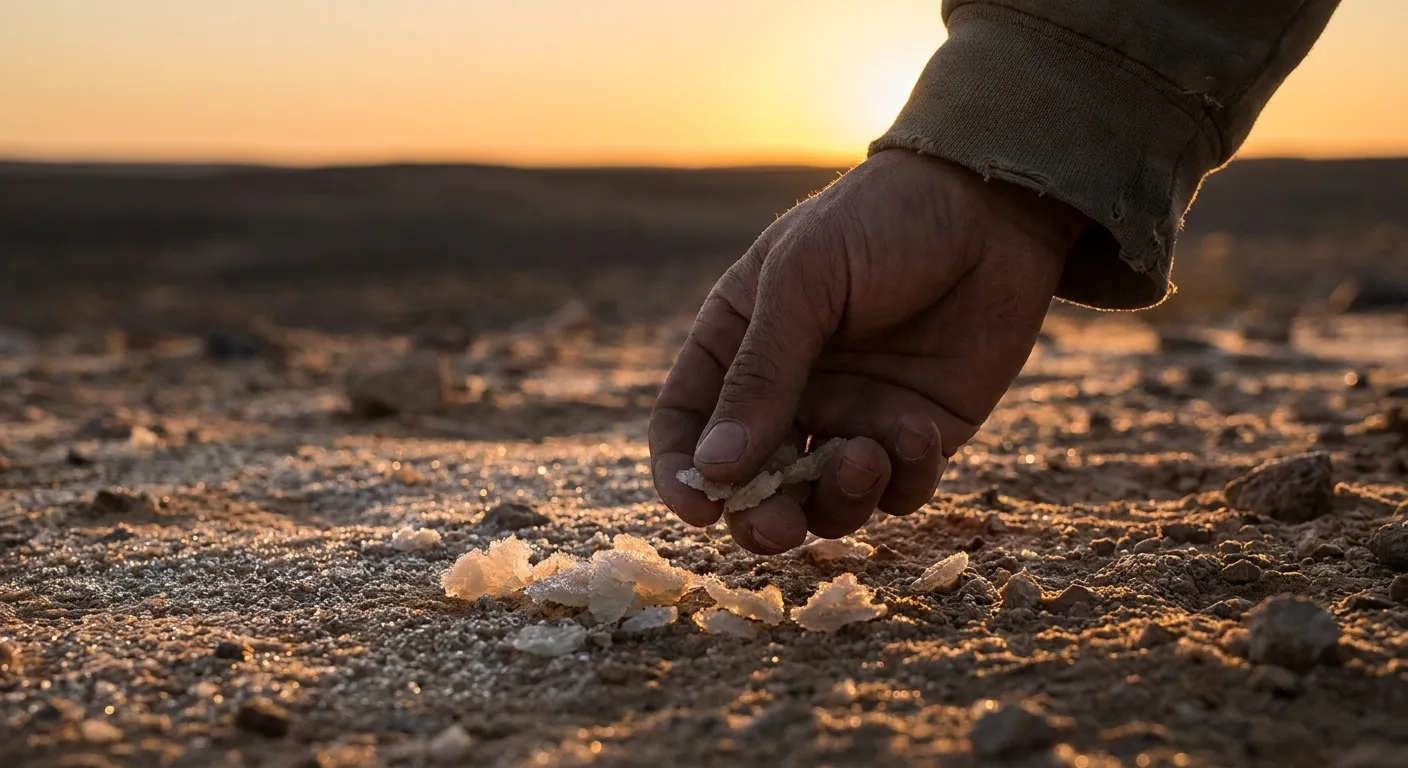
If there's no recipe, then what? Not another formula — that would be unbearable irony — but a posture. The manna couldn't be stored. It had to be gathered fresh every morning. That's not a flaw in the system. That's the system.
The Question We’ve Been Building Toward
For five parts, we’ve been taking the recipe apart.
We watched God refuse to reuse Jericho’s march even on the very next city. We watched David ask twice in the same valley and win the battle a formula would have lost. We watched Moses run the old method at the rock and lose the Promised Land over it. We turned the mirror around and found the fear underneath our love of the checklist. And we watched Jesus Himself — all power, all authority — pointedly refuse to heal anyone the same way twice.
So now the honest question, the one you’ve maybe been holding for five weeks: if there’s no recipe, then what?
And I have to be careful here, because there is an almost unbearable irony waiting in this last part. If I close a series called Never the Same Way Twice by handing you a five-step formula for discerning God’s will — I’ve just rebuilt the exact thing we spent five parts tearing down. I’ve handed you a recipe for not using recipes.
So this isn’t a formula. It’s a posture. And the best picture of it in the whole Bible is breakfast.
The Bread That Wouldn’t Keep
When Israel was in the wilderness with no food, God fed them with manna. And the way He did it tells you almost everything about how He intends to relate to His people.
Then Yahweh said to Moses, “Behold, I will rain bread from the sky for you, and the people shall go out and gather a day’s portion every day, that I may test them, whether they will walk in my law or not.…”
A day’s portion every day. Watch what God deliberately built into the system. He could have provided a month’s worth at once. He could have made it storable, stockpilable, something you gather once and draw down from. He didn’t. He made it a daily thing, on purpose — “that I may test them, whether they will walk in My law.”
And then He made the daily-ness non-negotiable in the bluntest possible way:
Moses said to them, “Let no one leave of it until the morning.” Notwithstanding they didn’t listen to Moses, but some of them left of it until the morning, so it bred worms and became foul; and Moses was angry with them.
They tried to store it. Of course they did — that’s the recipe instinct, the Israel-wanted-a-king instinct, the let me get enough of this that I don’t have to come back tomorrow instinct. And the stored manna bred worms and stank. It rotted on purpose. God designed the provision so it could not be hoarded. You could not get ahead. You could not graduate. You could not gather enough today to skip the relationship tomorrow.
Every single morning, the entire nation had to get up and go out and gather again. Fresh. New. Today’s.
That is not a flaw in the system. That is the system. And it’s the answer to “if there’s no recipe, then what?” The answer is: there’s manna. There’s a God who gives you exactly what you need for the situation in front of you, and gives it fresh, and built the whole thing so you’d have to keep coming back. The thing we’ve been calling a frustration for five parts — why won’t He just give me the formula — turns out to be the mercy. He won’t let your provision rot into a substitute for Him.
Jesus put the whole thing into one line of the prayer He taught us: Give us this day our daily bread. Not this month’s. Not a system that runs without You. This day’s. Today’s. Again.
So What Do You Actually Do? You Ask.
If the manna is daily, then the posture is simple to name, even though it takes a lifetime to learn: you ask.
That’s it. That’s the whole non-formula. It’s the one thing every person in this series actually did. Strip away the marching and the ambushes and the torches and the mud, and underneath all of it is the same two moves, every single time:
They asked. Then they obeyed — to the letter — whatever He said.
Joshua asked, and got a march. David asked, and got “do not go up.” Gideon asked, and got pared down to three hundred. Jehoshaphat asked, and got “send the singers.” The centurion asked, and got a word. Every story. Same two moves. Ask, then obey exactly.
The non-formula has its own kind of pattern after all — but the pattern isn’t a method, it’s a posture. It’s the posture of a person who has given up on graduating. A person who treats every new situation as a genuine question, brought fresh to God, the way you’d gather manna in the morning. Not “what’s the technique,” but “Lord, what about this — today?”
And James, writing to ordinary Christians facing ordinary hard things, says this is not exotic or advanced. It’s available to anyone, right now:
But if any of you lacks wisdom, let him ask of God, who gives to all liberally and without reproach, and it will be given to him.
If any of you lacks wisdom, let him ask God. Not “let him find the formula.” Not “let him locate the right technique.” Ask. And the promise attached is stunning — God gives “generously,” and “without reproach.” He doesn’t sigh at you for not having figured it out yourself. He doesn’t tell you to go read the manual. He gives. That’s the God on the other side of the asking.
What Doesn’t Change (Don’t Miss This)
Now — this is the guardrail, and the whole series falls into a ditch without it. So hold it carefully.
“Ask fresh every day” does not mean “nothing is ever settled” or “you can’t know anything until you get a feeling.” That’s not dependence; that’s paralysis, and it’s just as far from God as the recipe was.
Here’s the line, one more time, because it’s the most important sentence in the series:
God’s character never changes. God’s commands never change. God’s methods almost always do.
There is an enormous amount you never have to re-ask. You do not need to inquire about whether to love your neighbor this week, or whether to tell the truth, or keep your marriage vows, or forgive the person who hurt you, or worship God alone. He has spoken on those — clearly, permanently, in Scripture. They are settled. They are the manna that, in a sense, was given once for all: His revealed moral will, written down, unchanging. To go around “asking fresh” about whether to obey what He’s already plainly commanded isn’t dependence. It’s the long way around to disobedience.
The daily asking is for the other category. The how. The strategy, the timing, the specific next step, the unscripted situation the commands don’t spell out. Should I take this job. How do I handle this with my son. Is this the season to move, to speak, to wait. What does loving this difficult person actually look like, concretely, this week. That’s the manna category. That’s where God reserves the right to say something new, and where the recipe is most dangerous precisely because it talks you out of asking.
So the posture has two hands. One hand holds the things that are settled — firmly, no re-litigating, no waiting for a feeling. The other hand stays open for the daily manna — the fresh, situational how. Discernment is mostly learning which hand a given question belongs in.
The Means Are Not the Formula
One more clarification, because someone will hear “just ask” and wonder if that means closing your Bible and waiting for lightning. It doesn’t.
God has given real means for the asking — and using them is not rebuilding the recipe. The recipe was a process you run instead of relating to God. The means are how you relate to God. Completely different things.
His Word. The settled hand. You ask inside the boundaries of what He’s already said — Scripture doesn’t change with your situation, it frames it. Any “fresh word” that contradicts the written one isn’t fresh; it’s false.
Prayer. The actual asking. Not performed, not formulaic — just honest, present-tense bringing of the real question to the real God.
The Spirit. The living guide Jesus promised — who leads persons, not processes, which is exactly why He can’t be reduced to a technique.
Wisdom. God expects you to think. Discernment isn’t the absence of reasoning; James says God gives wisdom — He sharpens your judgment, He doesn’t replace it.
Counsel. The community around you. The body of people who can see what you can’t.
That’s not a five-step formula — you don’t run them in order and get an answer out the bottom. They’re more like the field where the manna falls. They’re the places you go, together, to gather. Sometimes the answer comes through one, sometimes through several at once over time. But they are means of the relationship, not a substitute for it. The moment any of them becomes “the process I run so I don’t have to actually depend on Him” — it’s quietly become the recipe again. Same items, totally different heart.
Monday Morning
So let’s land it where it has to land — on an ordinary Monday, with your actual life.
You have a wall. We named it back in Part 1 — the marriage, the kid, the calling, the habit, the diagnosis, the door that’s stayed shut. And for years, maybe, you’ve been running recipes at it. Hunting the technique. Trying the thing that worked for someone else. Reaching for the formula.
Here’s what changes Monday morning. Not a new technique. A posture:
Hold your plans loosely. Have them — you should think and plan — but hold them the way David held “attack head-on”: ready to hear “do not go up.”
Inquire before you repeat. When a familiar situation comes back around, treat it as a new question. Don’t run the recipe box on autopilot. Ask again, like David asked again.
Don’t confuse the categories. The settled things, obey — now, no re-asking. The unscripted how — bring it fresh, today, like manna.
Expect Him to be personal. He’s not going to hand you the blind man’s mud because it worked for the blind man. He’s going to deal with you. Stop managing the method. Trust the One with the authority.
Gather fresh tomorrow. Today’s bread is today’s. You will not get far enough ahead to stop coming back — and that was never a bug. That’s Him keeping you close.
It’s slower than a recipe. It’s less impressive than a recipe. It will never fit on a coffee mug or in a worship lyric. But it’s the only thing that actually worked for anyone in this entire series — and it’s the thing the recipe was always counterfeiting.
The Walls Really Did Come Down
Let’s go back to where we started.
The walls really did fall at Jericho. That part of the song is true. God really does bring down walls — yours included. The longing underneath the cliché is a good and right longing.
But the God who flattened Jericho had a thousand other ways to win, and He has never once used the same one twice. He had an ambush for Ai and three hundred torches for Gideon and a choir for Jehoshaphat and “do not go up” for David. He had mud for the blind man and a word for the centurion and a touch for the leper. And He has something for your wall, too — something specific, something fitted to you, something you will not find by hunting for a recipe and will not miss if you simply learn to ask.
So don’t go looking for the formula. There isn’t one, and the looking is the very thing keeping you from what works.
Go gather your manna. This morning. Fresh. Ask Him about the wall — today’s version of the question — and then do exactly what He says, even if it looks nothing like what He said last time, or what He said to someone else.
He has never been hard to reach. He has only ever been hard to systematize. And those are very different problems — because the second one was never a problem at all. It was Him, refusing to be anything less to you than a Person.
A Prayer
Father, thank You for the manna — not just that You fed them, but for how You fed them. Daily. Un-hoardable. Built so they’d have to come back every morning. I see now that the thing I kept calling frustrating is the thing keeping me close.
Forgive me for trying to store it. For wanting enough of You gathered up that I wouldn’t have to come back tomorrow. For hunting recipes when You were offering me bread.
Teach me the posture. Help me hold the settled things firmly — Your commands, Your character, the things I never have to re-ask — and obey them now, without stalling. And help me bring the rest to You fresh: the how, the timing, the next step, today’s version of the question.
Give me today my daily bread. I’m not asking for the month’s supply anymore. I’m not asking for the formula. I’m asking for You — this morning, and then again tomorrow morning, and every morning after that.
You were never hard to reach. Help me stop trying to systematize You, and just come.
Amen.
Reflection Questions
-
Where have you been trying to “store the manna” — to get far enough ahead with God that you wouldn’t have to keep coming back? What would daily-gathering look like instead?
-
Sort your wall into the two hands. What about your situation is settled (a clear command, His character — obey now, no re-asking)? What about it is the how (strategy, timing, next step — bring fresh)? Don’t confuse the two.
-
Of the means — Word, prayer, the Spirit, wisdom, counsel — which have you been treating as a formula to run rather than a place to meet God? What would change if you came to it as relationship instead of process?
-
Look back over the whole series. Joshua, David, Moses, the Pharisees, Jesus’ healings, the manna. What’s the one thing God has been pressing on you for six weeks? Name it — and name the first fresh question you’re going to bring Him tomorrow morning.
The End of the Series
You’ve reached the end of Never the Same Way Twice — but the posture it’s pointing to doesn’t have an end. That’s the whole idea. There’s no final technique to arrive at, no recipe to master and file away. There’s just tomorrow morning, and the manna, and a God who would rather be needed than used.
The walls come down. They really do. Just never the same way twice.
Read the series from the beginning: Never the Same Way Twice